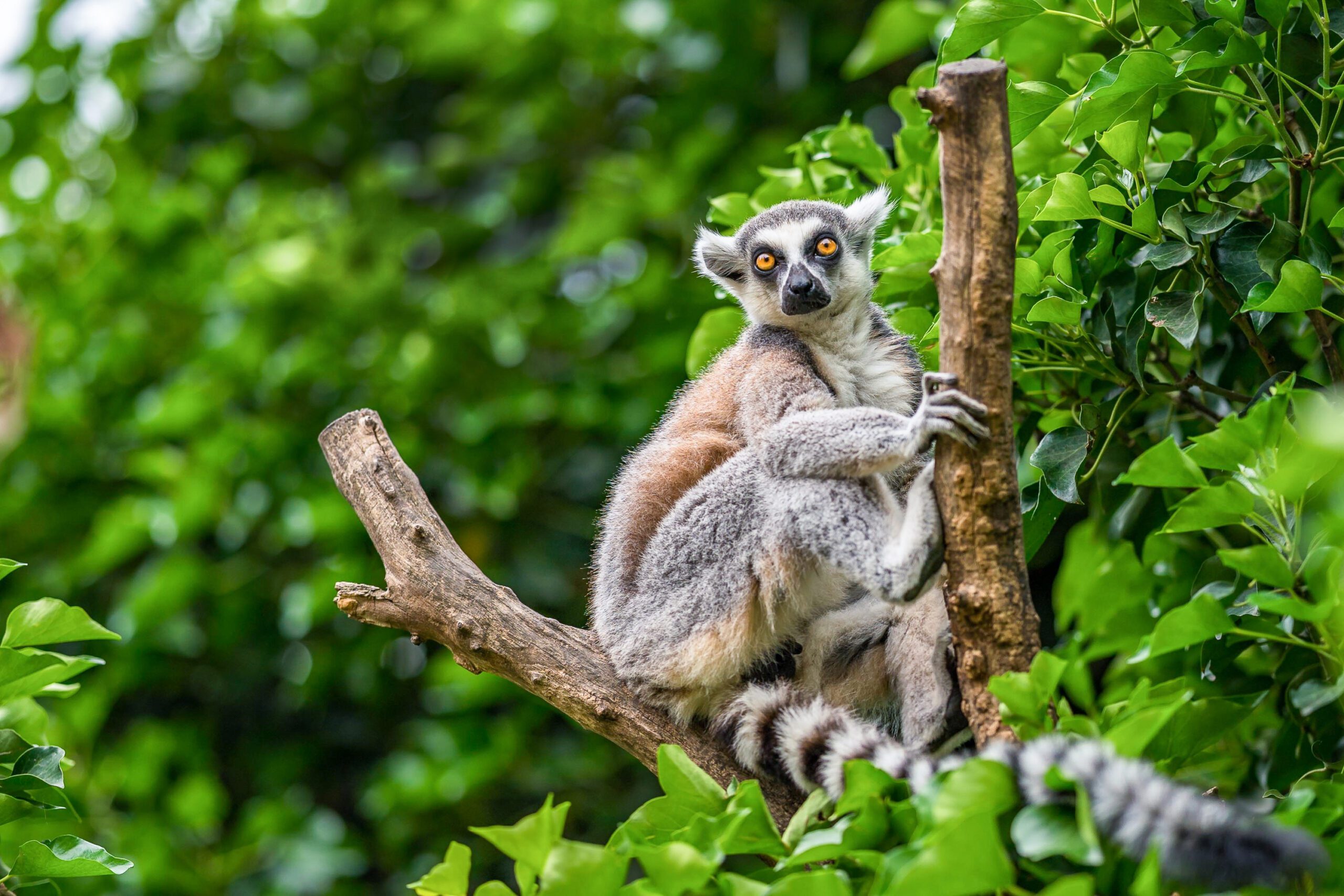
Madagascar split from mainland Africa roughly 160 million years ago and from India around 88 million years ago, and that long isolation has produced one of the most singular concentrations of biodiversity on the planet. More than 85% of the island's plant and animal species exist nowhere else on Earth.
Lemurs, and Not Much Else Like Them
Lemurs are the headline act — over a hundred recognised species and subspecies, ranging from the mouse lemur, among the world's smallest primates, to the ring-tailed lemur most people picture when they hear the word. Nowhere else on the planet has anything resembling this primate radiation, because nowhere else did primates evolve in this kind of isolation.
But the endemism runs far beyond lemurs. Two-thirds of the world's chameleon species live in Madagascar, including both the largest and among the smallest known. Baobab trees — six of the world's nine species are endemic to the island — punctuate the western landscape in forms found nowhere else, their swollen trunks visible for kilometres across the dry deciduous forest.
A Living Laboratory, Still Being Catalogued
Scientists have described more than 615 new species in Madagascar in the past decade alone — a rate that suggests the island's biodiversity is still being fully documented rather than simply admired. Much of this diversity concentrates in the eastern rainforest belt and the island's remaining forest fragments, increasingly under pressure from habitat loss.
The far north, around Nosy Be and private islands such as Nosy Ankao, offers a way to experience this concentration of endemic wildlife alongside Sakalava heritage and reef, without the long overland transfers that define more conventional Madagascar itineraries.