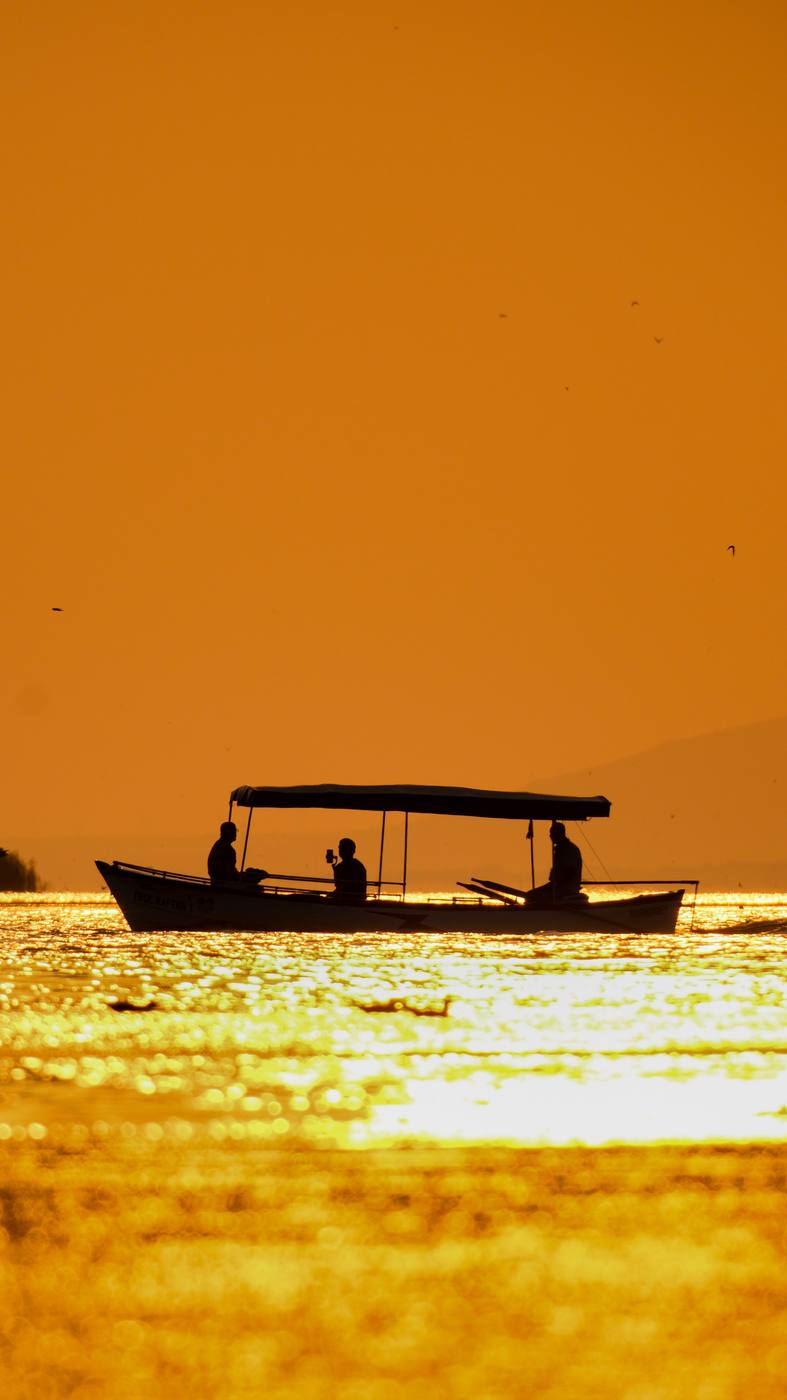
By the time the circuit reaches its fourth country, something in the pace has already changed. Zambia was ground underfoot. Zimbabwe was elephants at eye level on the Zambezi floodplain. Mozambique was watching a war-ravaged park come back to life. Malawi is none of those things — it's water, quiet, and an island so improbable that most visitors don't believe what they're looking at until they've walked its length themselves.
An Island That Shouldn't Technically Belong to Malawi
Likoma Island sits just a few kilometres from the Mozambican shore, entirely surrounded by Mozambican territorial waters — and yet it's Malawian territory, an exclave with Mozambique on every side. The reason traces back to the 1880s, when Anglican missionaries from the Universities' Mission to Central Africa, responding to an appeal by David Livingstone, chose the island as their inland headquarters. When colonial borders across East Africa were formalised after the Anglo-Portuguese Treaty era, the mission's presence was enough to keep Likoma under British — and eventually Malawian — administration rather than Portuguese Mozambique's.
St Peter's Cathedral: A Gothic Revival Building in the Middle of a Lake
The island's defining landmark is disorienting the first time you see it. St Peter's Cathedral is a full Gothic Revival building in granite and brick, 320 feet long and 85 feet wide — comparable in scale to Winchester Cathedral in England — standing on a small island in the middle of Lake Malawi, thousands of kilometres from the nearest comparable structure. The foundation stone was laid by Bishop Gerard Trower on 27 January 1903; the cathedral was dedicated on Michaelmas 1905, and formally consecrated in 1911 after storms brought down two of its buttresses mid-construction, forcing the towers to be rebuilt shorter than originally planned.
It remains the seat of the Diocese of Northern Malawi today, and it's still an active place of worship — not a preserved ruin. A Sunday service inside it, granite walls and imported stained glass over a congregation in full voice, is one of the more unexpected moments on the whole circuit.
A Culture Built on Bicycles and Baobabs
Likoma's economy has always run on fishing, rice, and cassava farming, and the island's rhythm still reflects that. With almost no motor vehicles, bicycles are the default way to move — loaded with fish, firewood, or passengers, threading between homes shaded by baobabs some of which likely predate the cathedral itself. The Green Safaris Foundation, tied to Kaya Mawa, supports several of the island's schools directly, and the women-led Katundu Textiles cooperative in nearby Nkwazi Village produces much of the fabric and furniture found at the lodge — a rare example of a luxury property's aesthetic being genuinely, not decoratively, local.
Kaya Mawa: The Lodge That Calls Itself "Maybe Tomorrow"
Kaya Mawa translates roughly to "maybe tomorrow" in Chichewa — an unhurried name for an unhurried place, and the lodge's own ethos in three words. Built into a rocky headland on the island's western shore using local stone and materials, it's designed around the specific geography of its site rather than a template; several rooms sit on their own small outcrops, one effectively its own private islet at high water. It closes the circuit's sixteen nights on exactly the register this leg is meant to hold: after three countries of ground beneath your feet, a full day adrift on open water — a private boat, snorkelling over granite boulders where the lake holds more freshwater fish species than anywhere else on Earth, and a return to shore only when the light starts to go.
Lake Malawi holds nearly a tenth of the world's fresh surface water. On still nights it turns to glass, mirroring the sky so completely that the earliest European visitors simply called it the Lake of Stars.
Likoma is the fourth and final stop on our own sixteen-night circuit — Wind, after Soil in Zambia, Water in Zimbabwe, and Fire in Mozambique. For how the whole journey fits together, see the science behind a four-element safari, and for the leg immediately before this one, Gorongosa's own restoration story.