Fourteen kilometres off Mozambique's coast, the waters surrounding Benguerra Island and its neighbouring islands fall inside the Bazaruto Archipelago National Marine Park — a UNESCO-recognised reserve that has quietly become one of the last strongholds for several species that have all but disappeared from the wider Indian Ocean.
What Lives in the Park
The marine park holds one of the largest remaining populations of dugong in the western Indian Ocean, alongside five species of marine turtle — green, loggerhead, hawksbill, leatherback and olive ridley — that nest and forage along its beaches and reefs. Humpback whales pass through the channel in season, and researchers still consider parts of the reef system under-explored relative to its ecological richness.
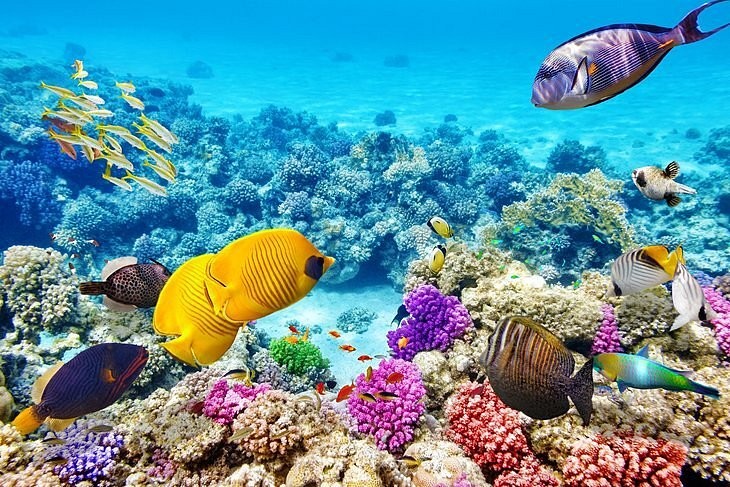
Coral cover here has fared better than much of the Indian Ocean, thanks largely to the archipelago's isolation and the marine park's protected status since Benguerra was declared a national park in 1971. Snorkelling and diving reveal a reef genuinely thick with tropical fish, and green sea turtles are common enough that sightings on a single outing are the norm rather than a highlight.
Diving and Snorkelling the Park
Most reef access is a short boat ride from Benguerra Island itself, with conditions favouring visibility and calm water for much of the year. Traditional dhow sailing remains a common way to reach quieter stretches of reef, pairing the marine park's ecology with the archipelago's older maritime culture rather than treating the two separately.
For travellers building a longer circuit, the marine park forms the Mozambique anchor of Elementa Africa's Salt & Culture journey, paired with Madagascar's Nosy Ankao by private flight.