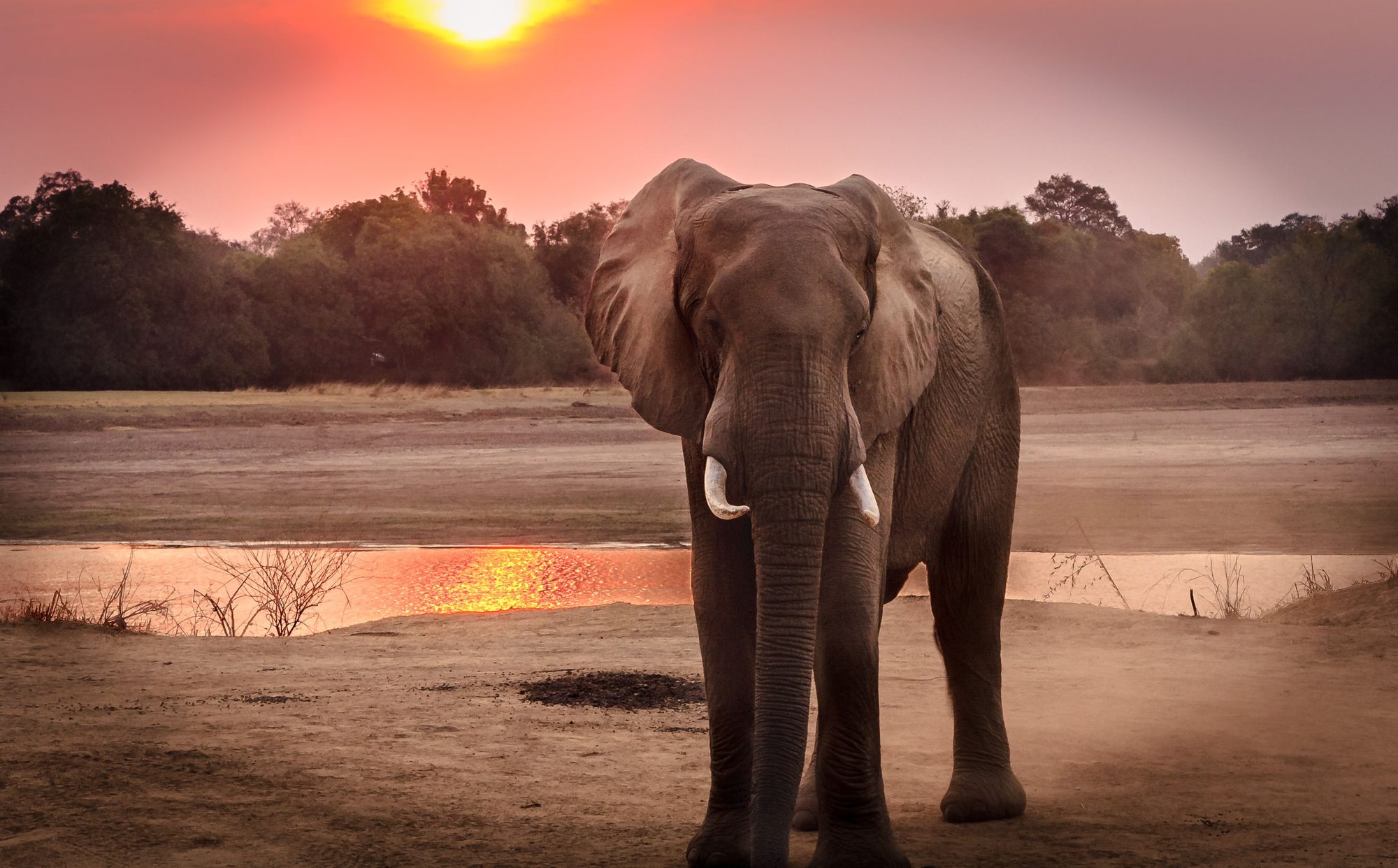
South Luangwa is roughly half the size of Kruger or Etosha, and yet in terms of sheer concentration of big game, it sits at the top of the pile. Almost everything that makes a safari feel alive — abundance, proximity, the sense that the bush is not performing for you but simply going about its business a few metres away — is present here in a way that few other parks on Earth can match.
The Valley of the Leopard
South Luangwa is home to one of the highest densities of leopard anywhere in Africa — some accounts rank it the highest naturally occurring population on the continent. The reason is simple: an abundance of impala and bushbuck, and riverine forest thick enough to give a solitary, tree-climbing predator everything it needs. Unlike most parks, South Luangwa permits night drives, which means the valley's other nocturnal cast — hyena, genet, civet, and the leopards themselves — become visible in a way daytime game drives simply cannot offer.
A Park With Its Own Animals
Three subspecies exist here and nowhere else: Thornicroft's giraffe, marked as though it were wearing long brown socks; Cookson's wildebeest; and Crawshay's zebra. Add to that healthy populations of elephant, buffalo, hippo and lion, a resident population of African wild dog, and over 400 recorded bird species — nearly 60% of everything ever recorded in Zambia — and the valley's reputation for abundance starts to look less like marketing and more like simple accounting.
"There are millions of impala, and millions of bushbuck. And leopards love this environment, with so many trees."
The Man Who Started It All
South Luangwa's other claim to fame is less about wildlife and more about how we're allowed to experience it. In the 1950s, British conservationist Norman Carr pioneered what became the modern walking safari here — at a time when most visitors to Africa still carried rifles rather than cameras. Carr placed the interests of the land and its communities above the demands of trophy hunters, and the guiding tradition he began remains the gold standard for foot safaris across the continent more than seventy years later.
What the River Brings
The Luangwa River is often described as the most intact major river system left in Africa, and it shows: its oxbow lagoons and shifting floodplains concentrate wildlife along its banks throughout the dry season, from May to October, when water elsewhere in the valley disappears entirely. Elephant herds cross it in full view of camp decks. Hippo pods crowd its remaining pools. And the birdlife along its edge — carmine bee-eaters, fish eagles, crowned cranes — draws serious birders back year after year, regardless of what else the valley has to offer.
This is where our circuit begins — the Soil leg, and deliberately so. There is no better place on the continent to learn what it means to read ground instead of simply crossing it, in a valley that has spent seventy years proving abundance and intimacy are not opposites.