Ask most people how a safari itinerary gets built, and the answer is usually the same: pick the parks with the best chance at the Big Five, string them together in a sensible order, done. It's a perfectly good way to plan a trip. It's also not the only way.
There's an older, quieter logic available — one that doesn't ask "where will I see the most animals" but "what does this place actually do to a person." Soil. Water. Fire. Wind. Four elements, four countries, one circuit — and a genuinely different way of deciding where you go and, just as importantly, in what order.
Why the order matters
A trip built around wildlife checklists doesn't usually care much about sequence — you can see the Big Five in almost any order and it doesn't change the experience of any single sighting. A trip built around the four elements is the opposite. The order is the design.
Soil comes first. Grounding, before anything else — dawn walking safaris in South Luangwa, Zambia, hands and boots in the dust, learning to read what the ground already knows before you ask anything more of yourself.
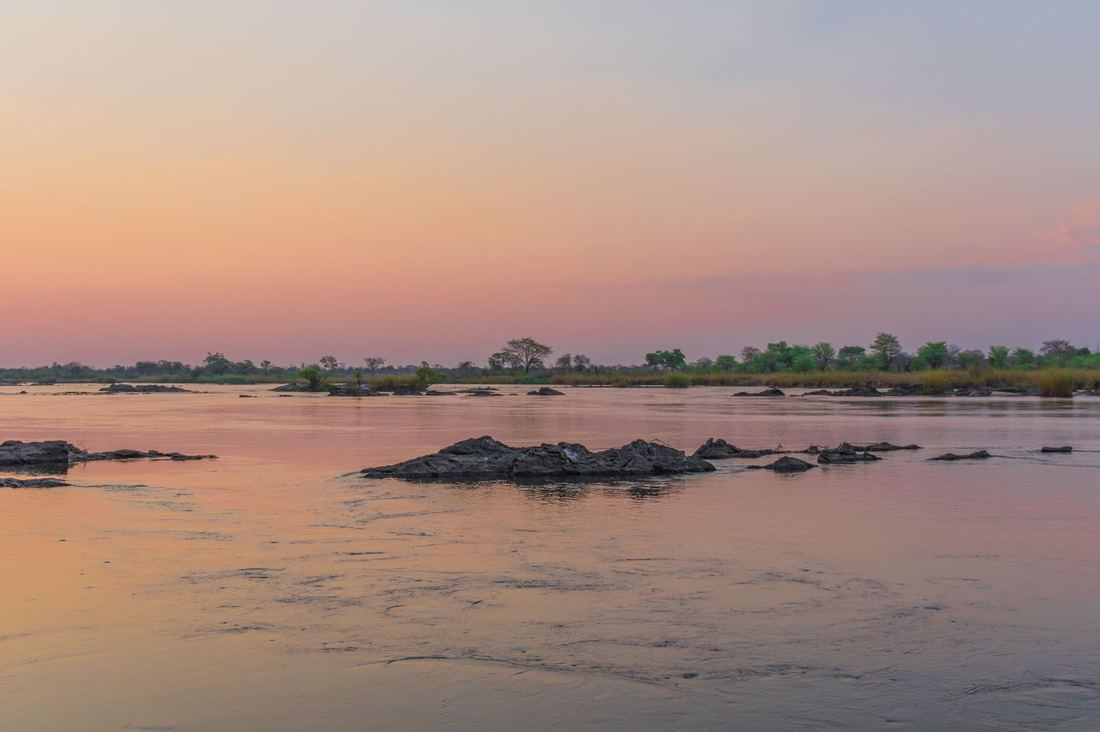
Water comes second. Something has to soften what's rigid before it can go anywhere else, and there's no better place for that than Mana Pools in Zimbabwe, where elephant herds move at eye level and the whole rhythm of the day is set by the Zambezi rather than a schedule.
Fire comes third. By the midpoint of a long journey, most people need to reconnect — with other people, with a bigger story than their own. Gorongosa in Mozambique, one of the great conservation restoration stories on the continent, told firsthand around a boma fire by the people who lived through it, does exactly that.
Wind comes last. After three countries of ground beneath your feet, the final stop has to be an exhale, not another activity to check off. Lake Malawi — water, sky, and nothing left to accomplish — is where that circuit closes.
This isn't a metaphor for its own sake
It would be easy to dismiss this as branding dressed up as philosophy. The test is whether the framing actually changes what happens on the ground, and it does. A soil-first itinerary spends its opening days on foot, deliberately, before introducing vehicles or water-based activity. A fire-centered stop is built around shared storytelling, not solo reflection. A wind-closing stop has no agenda at all — which is a harder thing to design well than it sounds, because most operators are uncomfortable building "nothing to do" into a luxury itinerary on purpose.
Why nobody else is doing this specific version
Big Five checklists and "top lodges in X" content dominate safari planning because they're easy to write and easy to search for. An elemental framework asks something different of both the traveller and the operator — it requires the whole circuit to be built around a sequence, not just a list of good places, and it requires every stop to justify its position in the order, not just its own individual merit.
That's a harder thing to build than a top-10 list. It's also, we'd argue, a genuinely better way to plan sixteen days in Africa than sorting destinations by which ones have the most leopards.
Frequently Asked Questions
Why is the circuit ordered Soil, Water, Fire, Wind? Each element does something specific in sequence — grounding first, then softening what's rigid, reconnection with a bigger story, and finally an exhale — rather than being ordered for wildlife-checklist convenience.
What does each element represent in the circuit? Soil is grounding in South Luangwa, Zambia. Water softens in Mana Pools, Zimbabwe. Fire reconnects in Gorongosa, Mozambique. Wind closes the journey at Lake Malawi, Malawi.
Is the four-element framework just branding? The test is whether the framing actually changes what happens on the ground — and it does, since it directly determines destination order rather than being applied after the fact.