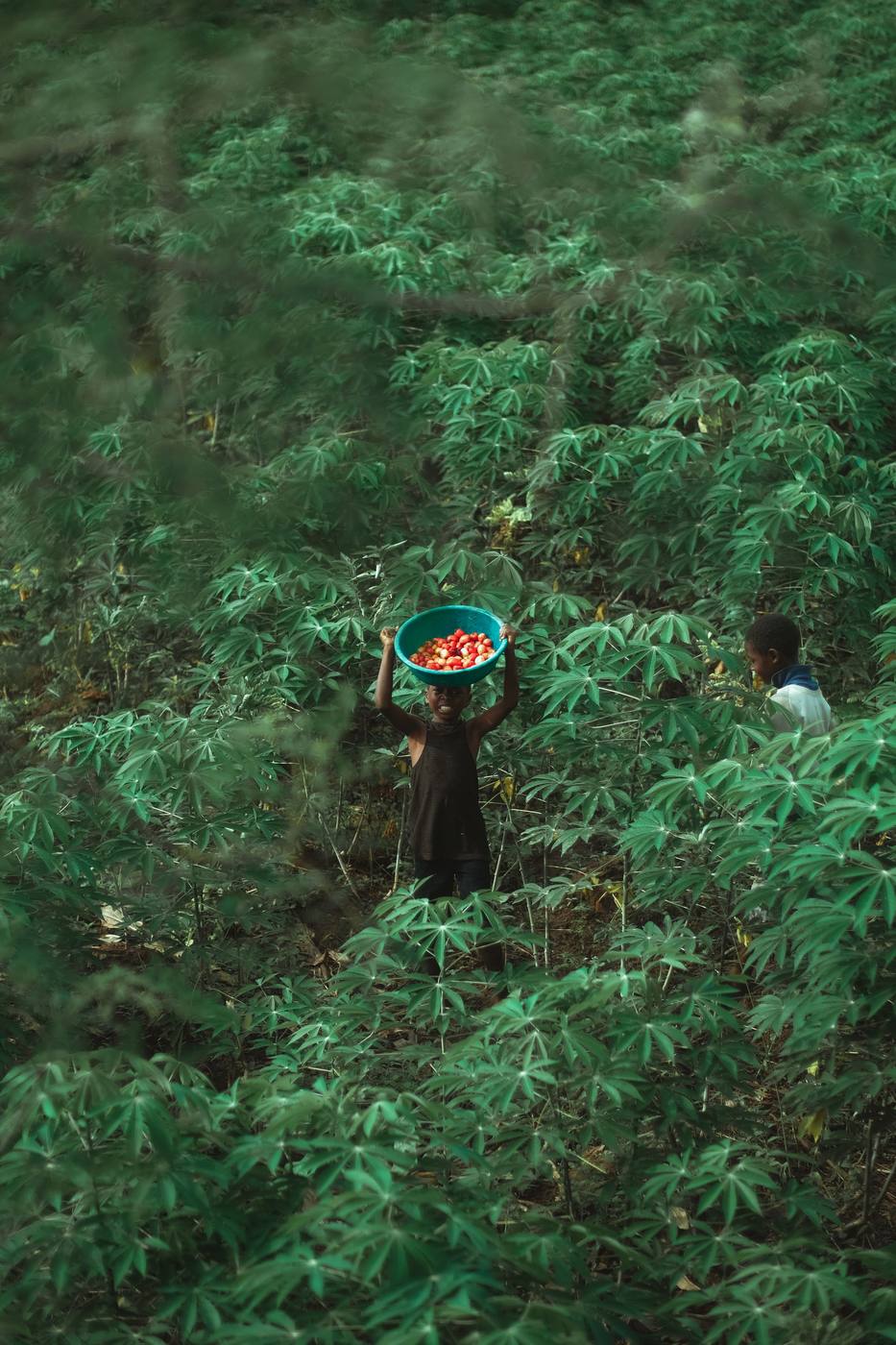
It is easy, on safari, to let the wildlife absorb all the attention. But every one of the landscapes on this circuit is also somebody's home — has been for centuries, in most cases — and the culture built around each one is as distinctive as the terrain itself. Soil, water, fire and wind are not just elements here. They are also, in a real sense, four different peoples' answer to the same question: how do you live well on this particular piece of the earth?
Soil — The Kunda of the Luangwa Valley
The communities living along the eastern bank of the Luangwa River are largely Kunda people, an offshoot of the Bisa who migrated east from the Congo Basin generations ago after the collapse of the Luba and Lunda kingdoms. Their language, Chikunda, is closely related to Bisa and Nsenga — evidence of a long history of intermarriage and exchange with neighbouring groups along the valley. Each August, Kunda communities gather for the Malaila traditional ceremony, a celebration of harvest and heritage that predates the national park entirely. Their knowledge of this ground — which plants heal, which tracks mean danger, which floodplain will hold water longest — is the same knowledge that shaped South Luangwa's guiding tradition from the very beginning.
Water — Life Along the Zambezi
Zimbabwe's population is overwhelmingly Shona — a collective term for the Manyika, Zezuru, Karanga, Korekore and other closely related clans who make up roughly three-quarters of the country, alongside the Ndebele in the west. Along the Zambezi Valley itself, smaller communities including the Tonga have lived for generations in close relationship with the river's rhythms — its floods, its fish, its role as both border and lifeline between Zambia and Zimbabwe. Mana Pools takes its name from the Shona word for "four," referring to the four permanent pools left behind as the Zambezi's course shifted — a piece of local knowledge turned into a place name, the way so much of this landscape's geography has been.
Every one of these places was named, understood and lived in long before it was ever mapped for tourism.
Fire — Communities Rebuilt Alongside a Park
Gorongosa's human story is inseparable from its ecological one. The same civil war that stripped the park of 95% of its large animals left the surrounding Mozambican communities in extreme poverty — a devastation Greg Carr encountered directly when he first arrived in 2004. The restoration project that followed was built on the premise that a national park cannot recover in isolation from the people beside it: today, close to 1,600 local staff work across the park, and a network of 89 primary schools serves the communities ringing its border. Village visits arranged through the park offer a rare, honest look at daily life rebuilding itself alongside the wilderness — sustainable farming, local crafts, a generation of children now being educated in schools their parents never had.
Wind — An Island of Fishermen and Faith
Our circuit ends on Likoma Island, in Lake Malawi, among a population drawn mostly from the Nyanja people, with smaller Chewa and Tonga communities. Likoma has no real road network — bicycles and footpaths carry almost all its traffic — and its economy still runs on fishing, much as it has for generations. On weekends, Malipenga and Chioda dance troupes compete against rival teams from neighbouring Chizumulu Island, in feathered caps and knee-high socks, performing a tradition that traces back to the colonial era. Overlooking it all is St Peter's Cathedral, a Gothic Revival landmark built by Anglican missionaries between 1903 and 1911 — proof that even the most remote corner of this circuit has its own improbable, centuries-old story.
Four elements, four countries, and four communities who were reading this land long before any safari circuit existed. At Elementa Africa, meeting them properly — not as a photo opportunity, but as a genuine exchange — is built into every leg of the journey, because the wildlife was never the whole story.