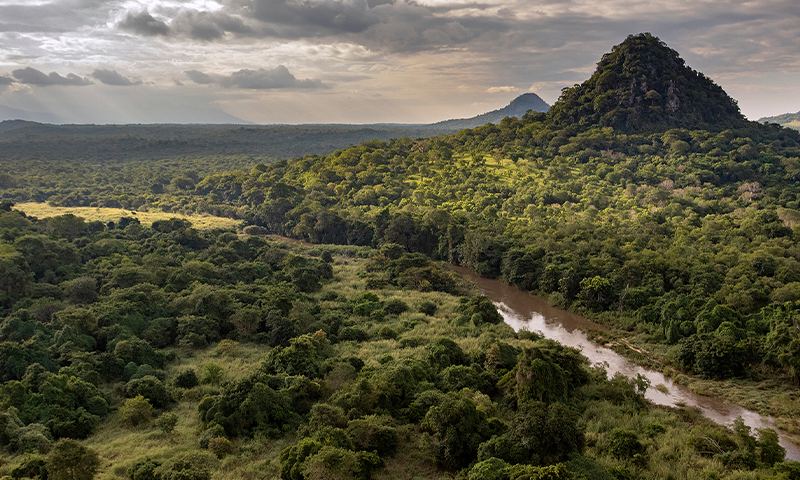
"What's the best month for a safari in Africa?" gets asked more than almost any other question, and the honest answer is: it depends which part of Africa, and what you actually want to see. Southern Africa's safari calendar runs on two seasons, not twelve months of interchangeable weather, and the right time for the Zambezi valley isn't necessarily the right time for the Serengeti further north.
The Two Seasons That Actually Matter
Dry Season: May to October
This is peak safari season across Zambia, Zimbabwe, Mozambique and Malawi. Vegetation thins out, animals concentrate around rivers and waterholes, and game viewing is at its most reliable. It's also the coolest, most comfortable period for walking safaris — the discipline South Luangwa is famous for. Expect the highest rates and the most demand for camps in this window, particularly August through October.
Green Season: November to April
Warmer, wetter, and dramatically greener. Birdlife is at its richest (migratory species arrive), newborn wildlife is everywhere, and rates typically drop 20–35%. The tradeoff is that some roads become impassable and a handful of camps close entirely during the heaviest rains (usually January–March). This is a genuinely good season for photographers and repeat visitors, but less ideal for a first safari.
Country-by-Country Notes
| Destination | Best months | Why |
|---|---|---|
| South Luangwa, Zambia | June–October | Peak walking safari conditions; many camps close entirely Nov–Apr due to flooding |
| Mana Pools, Zimbabwe | July–October | Elephants concentrate on the Zambezi floodplain as inland water dries up |
| Gorongosa, Mozambique | May–November | Dry season access; the park's wet season (Dec–Apr) restricts road travel |
| Likoma Island, Malawi | Year-round, best May–October | Calmest lake conditions and clearest visibility for snorkelling outside cyclone season |
Beyond Timing: a Few Honest Answers
What's the Safest Country for Safari Tourism?
Botswana, Zambia, Namibia and Rwanda are consistently rated among the safest African countries for tourists by international travel advisories, largely due to low crime rates in tourist areas and well-established, professionally regulated safari industries. Safety in remote safari areas is generally very high across Southern Africa regardless of country, since travellers are almost always accompanied by professional guides on private concessions.
What's the Prettiest Place in Africa?
Impossible to answer objectively, but frequently cited contenders include the Okavango Delta's channels, the Zambezi's Mana Pools floodplain at golden hour, Victoria Falls, Sossusvlei's dunes in Namibia, and Lake Malawi's clear water against granite hills at Likoma Island — all of which reward visiting in the dry season for clearest light and best access.
Where Do Well-Known Travellers Stay in South Africa?
South Africa's most recognised ultra-luxury safari properties — concentrated in the Sabi Sand and Kruger private reserves — are frequently favoured by high-profile travellers for their combination of malaria-free game viewing, short flights from Johannesburg, and a very high staff-to-guest ratio. We compare several of these directly against a multi-country circuit in Single-Lodge Safari vs. Multi-Country Circuit.
Where Do Americans Typically Vacation in Africa?
Kenya, Tanzania, South Africa and, increasingly, Botswana are the most-visited safari countries among American travellers, largely due to airline connectivity and established tour operator networks. We've laid out how those four countries compare directly, along with the case for a less typical four-country circuit instead, in Kenya, Tanzania, Botswana or South Africa?
Why Can't I Wear White on Safari?
White (and other bright or pale colours) shows dust and dirt within minutes of the first game drive, and stands out sharply against the muted browns and greens of the bush — the opposite of what you want on a walking safari, where blending into the surroundings matters for getting close to wildlife without disturbing it. Neutral tones (khaki, olive, stone, muted green) are the standard for exactly this reason, on every leg of our circuit and virtually every walking safari destination in Africa.
The right month depends far more on what you want from the trip — peak game density, richest birdlife, lowest rates, or calmest water for the final leg — than on any single "best time of year" answer that applies across the whole continent.